


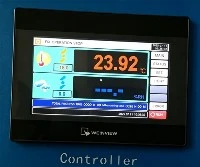


Thermal Shock Test Chamber From
ALP Technology
The thermal shock chamber from ALP Technology adopts a 2‑zone / 3‑zone multi‑chamber structure, which is independently equipped with a high‑temperature zone, low‑temperature zone and test chamber. The 2‑zone model mechanically moves test samples by means of a lifting basket, while the 3‑zone model rapidly switches hot and cold airflow through dampers. It enables samples to be exposed to extreme high‑ and low‑temperature environments within a very short time without intermediate gradient temperature variation, so as to complete abrupt thermal shock tests. It is mainly used to assess thermal shock stress caused by the difference in thermal expansion coefficients of various materials under instant large‑temperature‑difference switching, and reveal structural defects such as cracking, delamination, solder joint desoldering and package failure. It focuses on extreme reliability verification in the R&D phase. Applicable standards: GB/T 2423.22‑Na, GJB150.5A, MIL‑STD‑883 Method 1010, JESD22‑A106B.
Rapid temperature change Test Chamber From ALP Technology
the rapid temperature change (ESS) chamber from ALP Technology features an integrated single‑chamber structure, where test samples are fixed inside the same test chamber. Supported by the coordinated operation of refrigeration, heating and circulating air systems, it achieves controllable continuous temperature rise and fall in linear or non‑linear modes. The temperature changes steadily at the set rate, samples follow temperature variation synchronously as a whole, and the temperature gradient inside the chamber is minor. It is widely applied to Environmental Stress Screening (ESS) to stimulate early latent faults induced by components and manufacturing processes. It simulates rapid yet gradual temperature changes in real‑world environments, covering both R&D and mass‑production quality inspection scenarios. Applicable standards: GB/T 2423.22‑Nb, IEC 60068‑2‑14, JESD22‑A104, MIL‑STD‑2164.

Core Difference Comparison
| Comparison |
|
|
||||
| Applications |
|
|
||||
| Temperature Variation Mode |
Instant temperature jump without temperature‑ramping gradient
sample transfer time ≤10s
|
Controllable and gradual temperature change
adjustable rate (5‑30℃/min)
|
||||
| Generated Stress |
Thermal shock stress. Sharp temperature change on sample surface while internal temperature lags, generating huge interfacial shear stress
|
Thermal fatigue stress. Samples heat and cool synchronously with minor internal‑external temperature difference
|
||||
| Key Parameters |
Temperature switching time
temperature recovery time
shock temperature difference
|
Linear temperature‑change rate
temperature uniformity
temperature‑changing capacity under load
|
||||
| Test Subjects |
Components, assemblies
medium & small‑size specimens
|
omponents, assemblies
complete units
large‑size specimens
|
||||
| Test Orientation |
Extreme structural reliability verification
R&D exploratory test
|
Environmental stress screening for R&D and mass‑production quality inspection
|
||||

Selection Summary
Based on ALP Technology 20-years of experience in environmental test equipment solutions: select the thermal shock chamber if you need to simulate instant extreme hot‑cold jump and assess the resistance of materials and bonding interfaces to abrupt thermal shock. Choose the rapid temperature change chamber for temperature ramping at adjustable rates, real‑world gradual temperature‑change simulation and batch stress‑screening tasks.
Whether you are standardizing a new product line or solving a difficult failure issue, ALP TECHNOLOGY is ready to help.
✉️ E-mail: info@alp-environment.com
🔗 Website: www.alp-environment.com
"Technological Excellence Rooted in Integrity" - engineered into every test, delivered with every partnership.