


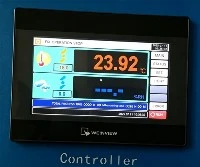


Testing Method
When using the Intelligent Multi‑Channel Temperature Scanner equipped with Pt100 RTD or K‑type thermocouple sensors, multi‑point temperature measurement can be realized, which is widely applied in test chambers, heat treatment, power industry, battery testing and equipment temperature‑rise tests by ALP TECHNOLOGY.
Wiring and Installation
Arrange temperature sensors at each measuring point, then connect sensor cables to corresponding terminals of each channel on the Multi‑Channel Temperature Scanner.
For thermocouples: Do not reverse positive and negative polarity.
For Pt100 RTD: Adopt 3‑wire connection to minimize measurement error caused by cable resistance. Disable unused channels in the instrument menu to avoid error alerts.
Parameter Configuration
Power on and enter the menu. Set each channel to match your sensor type (K‑type / Pt100). Configure the scanning interval for channel switching. Set independent high‑limit and low‑limit alarm values for every channel. Enable digital filtering if needed to suppress value fluctuation on‑site. For PC‑based data acquisition, configure communication address and baud rate (9600 is commonly used), then connect RS485 interface to PC or PLC.
Two Operation Modes
Auto‑scan Mode (Recommended)
The Multi‑Channel Temperature Scanner scans channels CH1, CH2 and so on automatically at preset intervals. It cyclically displays channel number and real‑time temperature with continuous sampling. Audible‑visual alarm will trigger once temperature exceeds set limits.
Manual Fixed‑point Mode
Lock one specific channel via keypad for focused observation. Press auto‑scan button to resume cyclic scanning.
Data Reading & Export
Read real‑time temperature directly from the local screen. Historical data can be saved and exported via USB flash drive or host computer software to generate temperature reports and curves. Check alarm logs to locate abnormal measuring points when alerts occur.
Troubleshooting tips: "OPEN" means sensor disconnection; "HHHH" stands for over‑range upper limit; "LLLL" stands for over‑range lower limit.
Key Advantages of Multi‑Channel Temperature Scanner from ALP TECHNOLOGY
Efficient multi‑point measurement
One Multi‑Channel Temperature Scanner supports 8‑64 measuring points with automatic cyclic sampling. Manual spot‑check with portable thermometers is no longer required. It is ideal for multi‑sensor test chamber measurement, equipment temperature‑rise test and battery pack temperature monitoring.
24/7 continuous monitoring with instant alarm
Independent alarm thresholds are available per channel. Audible‑visual alarm and relay output activate immediately upon over‑temperature at any point. It can interlock with cooling fans or emergency stop protection. Manual periodic logging is replaced to avoid missing transient temperature abnormalities during long‑duration tests.
Reliable accuracy without human reading error
Built‑in cold‑junction compensation, lead‑wire resistance compensation and digital filtering deliver industrial‑grade precision. Digital readouts eliminate manual reading mistakes and guarantee traceable test data.
Recordable data for test reporting
Full‑process historical temperature data is automatically stored. Export curves and reports directly as original records for product validation and type testing.
Easy integration into automation systems
Modbus‑RTU (RS485) protocol is supported for connection with PLC and industrial PCs for remote temperature reading. It reduces hardware cost and cabinet space instead of deploying multiple single‑point temperature meters.
Strong anti‑interference capability for industrial environments
Isolated input and hardware filtering ensures stable temperature readings under electromagnetic interference in workshops and laboratories.


Whether you are standardizing a new product line or solving a difficult failure issue, ALP TECHNOLOGY is ready to help.
✉️ E-mail: info@alp-environment.com
🔗 Website: www.alp-environment.com
"Technological Excellence Rooted in Integrity" - engineered into every test, delivered with every partnership.