


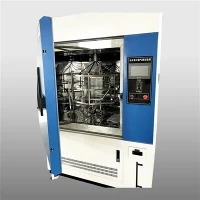


Within the field of material testing, rubber serves as an extremely versatile and widely adopted material. It is extensively applied across numerous industries, including automotive, aerospace, consumer goods and medical devices. Guaranteeing the quality and functional performance of rubber products carries great significance. One common technical inquiry we receive is whether a constant temperature chamber can be deployed for rubber material testing. As a leading supplier of constant temperature chambers, ALP Technology will explore this subject in depth and share comprehensive professional insights.
Understanding Rubber and Its Core Properties
Rubber is a polymer featuring distinctive physical and chemical characteristics. It possesses elasticity - capable of deforming under external stress and recovering to its original shape once stress is released. Nevertheless, these properties are heavily affected by ambient temperature. Elevated temperatures may soften rubber, diminish its elasticity and trigger chemical degradation. In contrast, low temperatures render rubber brittle, weakening its shock absorption capacity and deformation resistance.
Rubber's performance under varying thermal conditions determines its practical usability. For instance, rubber used in automotive tires must retain flexibility and grip in both hot summer and frigid winter environments. For aerospace applications, rubber seals are required to operate reliably under extreme temperature fluctuations during flight missions.
The Role of Constant Temperature Chambers in Rubber Testing
Constant temperature chambers manufactured by ALP Technology are engineered to deliver stable, precisely regulated thermal environments, making them ideal testing equipment for rubber-related evaluations.
1. Temperature-Dependent Property Testing
Hardness Testing: Rubber hardness exhibits an inverse correlation with temperature. Utilizing a constant temperature chamber enables accurate measurement of rubber specimen hardness at various preset temperatures. This supports defining the optimal operating temperature range and analyzing hardness variation caused by temperature changes.
Tensile Strength & Elongation Testing: Temperature exerts a substantial influence on rubber's tensile strength and elongation at break. At higher temperatures, rubber becomes more ductile; its elongation at break rises while tensile strength declines. At lower temperatures, rubber turns rigid. Tensile strength may increase marginally, yet elongation at break drops drastically. Constant temperature chambers facilitate these mechanical tests under controlled thermal conditions, generating precise data to support product design and quality management.
2. Aging and Degradation Testing
Thermal Aging: Long-term exposure to high temperatures causes thermal aging of rubber. Chemical reactions such as cross-linking and molecular chain scission will occur, deteriorating overall performance. A constant temperature chamber simulates prolonged high-temperature surroundings to accelerate aging progress. By tracking property variations (hardness, tensile strength, surface discoloration, etc.) over time, engineers can predict the service lifespan of rubber components.
Cold Brittleness Testing: Rubber tends to turn brittle and crack under mechanical stress in cold surroundings. A constant temperature chamber can cool specimens to target low temperatures and conduct mechanical stress tests, assessing the low-temperature resistance of rubber materials. This is critical for verifying rubber suitability for cold-region deployment or scenarios demanding reliable low-temperature performance.
Types of Constant Temperature Chambers for Rubber Testing
ALP Technology provides multiple series of constant temperature chambers applicable to rubber testing, with differentiated features for diverse testing scenarios:

1. Temperature-Dependent Property Testing
Hardness Testing: Rubber hardness is inversely proportional to ambient temperature. With the precise temperature control of our constant temperature chamber, users can accurately test rubber hardness at different preset temperatures, clarify the optimal service temperature range of materials, and grasp the law of hardness changes with temperature fluctuations.
Tensile Strength and Elongation Testing: Temperature exerts a decisive influence on the mechanical properties of rubber. Under high-temperature conditions, rubber becomes more ductile, with increased elongation at break and decreased tensile strength. At low temperatures, rubber stiffens significantly; its tensile strength rises slightly, while elongation at break drops sharply. Our constant temperature chambers provide stable and consistent test conditions, supporting accurate mechanical data acquisition for rubber product design and quality control.
2. Aging And Degradation Testing
Thermal Aging Testing: Long-term high-temperature exposure will trigger thermal aging of rubber, causing internal chemical changes such as molecular cross-linking and chain scission, which degrade material performance. Our constant temperature chambers simulate long-term high-temperature operating environments to accelerate rubber aging. By monitoring changes in hardness, tensile strength, color and other indicators over time, users can scientifically evaluate the service life and long-term stability of rubber products.
Cold Brittleness Testing: Rubber is prone to embrittlement and cracking under mechanical stress in low-temperature environments. Our equipment can stably cool rubber samples to target low temperatures and conduct mechanical tests to verify the cold resistance of materials, which is suitable for screening rubber materials used in cold regions and low-temperature working scenarios.
Types Of ALP Technology Constant Temperature Chambers For Rubber Testing
ALP Technology offers a full range of constant temperature test chambers to meet diversified rubber testing scenarios from laboratory small-sample testing to full-size product batch testing.
1. High-Low Temperature Chamber
The high-low temperature chamber delivers a broad temperature range covering ultra-low to high temperatures. It is suitable for evaluating rubber performance under diverse extreme thermal conditions. For instance, it can simulate temperature variations from cold startup of vehicles in winter to high-temperature environments inside engine compartments during operation.
2. Walk-In Temperature Test Chamber
The walk-in temperature test chamber is large-scale equipment that supports testing of full-size rubber products or multiple samples simultaneously. It is especially suitable for the automotive and aerospace sectors, where large rubber components require verification.
3. Explosion-Proof Temperature Test Chamber
Certain rubber testing processes carry explosion risks when flammable gases or vapors are released at elevated temperatures. The explosion-proof temperature test chamber is built with dedicated safety mechanisms to prevent explosions, making it ideal for testing rubber materials that generate combustible volatiles.
4. Bench-Top Temperature Test Chamber
For small-scale rubber tests in research labs or quality control departments, the bench-top temperature test chamber serves as a compact, cost-effective solution. It provides precise temperature control for limited quantities of specimens.
Advantages Of ALP Technology Constant Temperature Chambers For Rubber Testing
Precise Temperature Control: Our constant temperature chambers adopt advanced temperature control systems to sustain target temperatures with high accuracy. This guarantees reliability and repeatability of test results.
Uniform Temperature Distribution: Homogeneous temperature inside the chamber is critical for credible rubber testing. Our units are equipped with optimized air circulation systems to achieve even temperature distribution across the workspace and eliminate temperature gradients that skew test data.
Customizable Settings: Testing requirements vary for different rubber materials. Our constant temperature chambers can be customized in terms of temperature range, optional humidity control and testing duration, delivering tailored solutions for your rubber testing projects.
Conclusion And Call To Action
In conclusion, a constant temperature chamber is an indispensable tool for rubber testing. It enables accurate evaluation of rubber properties under various thermal conditions, which plays a vital role in product design, quality control and securing long-term service performance of rubber goods.
If you are looking for high-quality constant temperature chambers for rubber testing or have inquiries about our equipment, please do not hesitate to contact us. We strive to deliver optimal solutions and comprehensive after-sales support. Our professional engineering team can help you select the most suitable chamber matching your unique testing requirements. Start a discussion with us today and take the first step to upgrade your rubber testing capabilities.
References
ASTM International. Standard test methods for rubber properties. ASTM. Rubber Manufacturers Association. Technical guidelines for rubber testing. RMA. Polymer Testing Journal. Research papers covering rubber property changes under different temperature conditions.
Whether you are standardizing a new product line or solving a difficult failure issue, ALP TECHNOLOGY is ready to help.
✉️ E-mail: info@alp-environment.com
🔗 Website: www.alp-environment.com
"Technological Excellence Rooted in Integrity" - engineered into every test, delivered with every partnership.