


If you’ve ever been in charge of testing product durability—whether for electronics, automotive parts, aerospace components, or even outdoor gear—you’ve probably stumbled upon two common test setups: sand-dust test chambers and salt-spray test chambers. At first glance, they might seem like similar “enclosed boxes that simulate harsh environments,” but trust me, that’s where the similarities end. I’m Jake, part of the team that builds sand-dust test chambers, and I’ve spent the last 7 years walking customers through exactly why these two tests are not interchangeable. Let’s break down the key differences, when to use each, and why picking the wrong one could cost you big (in product recalls, failed field tests, or wasted cash on the wrong equipment).
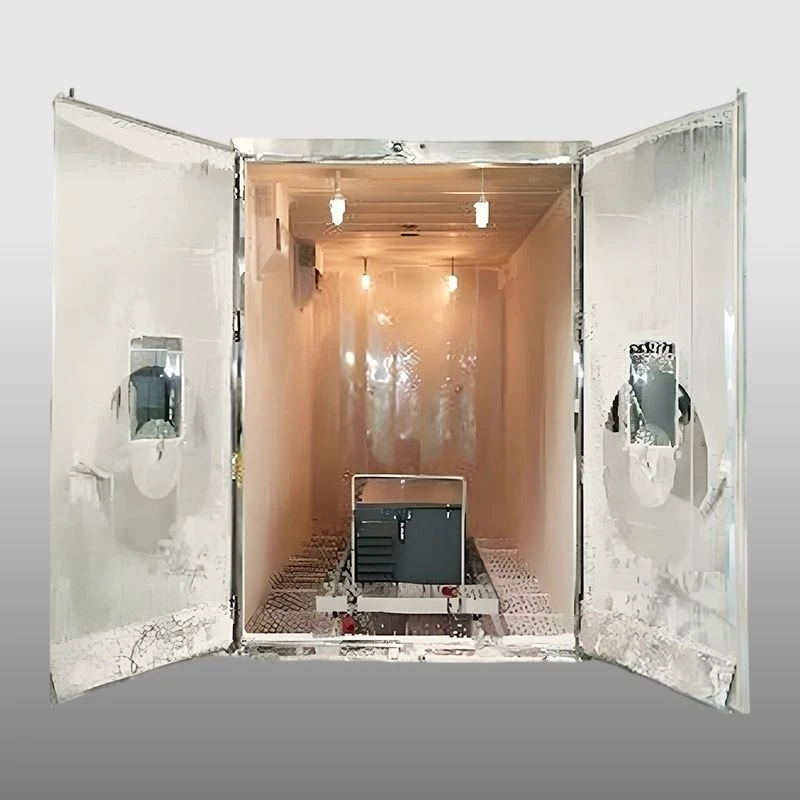

First, let’s nail down what each test actually simulates, because that’s the root of everything. A sand-dust test chamber is built to mimic environments where fine particulate matter (sand, dust, dirt) is everywhere—think desert highways, construction sites, agricultural fields, or even the dusty interiors of heavy machinery. The goal here isn’t just splashing a surface with grit; it’s replicating how particles get into tiny crevices, clog moving parts, scratch seals, or short out electronics. Most standards for these tests (like MIL-STD-810, a go-to for military gear) require controlled dust circulation: the chamber blows a specific particle size (usually between 75 and 150 micrometers, so fine enough to get through gaps but coarse enough to cause abrasion) at a set airflow, sometimes in cycles of blowing and resting to let particles settle. Some advanced models can even adjust humidity to make dust stick or stay airborne, depending on what the product needs to handle.
On the flip side, a salt-spray test chamber simulates corrosive environments with airborne salt particles, primarily from coastal areas, saltwater exposure (like boats or off-road vehicles that hit snow treated with salt in winter), or industrial facilities that use salt for processes. The key here is corrosion, not abrasion or ingress. Salt-spray tests use a salt solution (usually 5% sodium chloride in distilled water, per ASTM B117, another super common standard) that’s nebulized into a fine mist, then the chamber is kept at a constant high humidity (around 95%) to let the salt solution sit on product surfaces, react with metal, and cause rust, pitting, or coating degradation. The air pressure, temperature, and mist density are all calibrated to speed up corrosion—something salt-spray chambers are optimized for, not particulate ingress.
Now, the real tangible differences start with how they operate. Let’s talk about the test medium: sand-dust chambers use dry or slightly humid particulate matter, not liquid solutions. If you tried to run a salt-spray test in a sand-dust chamber, you’d end up with a gooey mess of salt and dust clogging filters and fans, and you wouldn’t get the controlled particle sizes needed to test ingress. Conversely, a sand-dust chamber’s fans and circulation systems aren’t built to handle corrosive salt mist—those parts would rust out super fast, and the mist would leave residue that’s impossible to clean, messing up future tests.
Temperature control is another big one, though it’s easy to overlook. Sand-dust tests often require varying temperatures because dust behavior changes with heat: hot dust is more likely to get into gaps and stick, while cooler dust might be lighter. For example, a desert environment can swing from 120°F (49°C) during the day to 50°F (10°C) at night, so a quality sand-dust chamber needs a wide temperature range to replicate that. Salt-spray tests, though, usually run at a constant temperature around 95°F (35°C)—that’s the sweet spot to speed up salt corrosion without making the mist evaporate too fast or not at all. You don’t see a lot of salt-spray chambers with extreme temperature fluctuations because it doesn’t help with corrosion speed, and it would throw off the mist density.
Then there’s the standard compliance, which is huge for regulated industries. Most military or aerospace products need to pass MIL-STD-810 for dust resistance, so you need a chamber that’s calibrated to that standard’s specific airflow rates, particle sizes, and test cycles. We have a whole line of chambers built for that—check out our Military Standard Dust Test Chamber if you need to meet those exact military specs, no cutting corners. If you’re testing a big product that won’t fit in a benchtop unit, our Walk-in Sand and Dust Test Chamber can handle full vehicles, heavy machinery, or aircraft parts, all while hitting those MIL-STD requirements. For general consumer products (like power tools, outdoor lights, or gardening equipment), there are ISO standards that apply too, all tailored to different particulate exposure levels. Salt-spray tests, meanwhile, follow standards like ASTM B117 or ISO 9227, which focus on corrosion resistance timelines—some tests run 24 hours, others 1000 hours, depending on how harsh the intended environment is. Trying to use a salt-spray chamber for MIL-STD dust tests would mean you can’t hit the required airflow, particle size, or temperature cycles, so your product might fail a government test even if it works fine in the field.
Let’s talk about what each test actually measures, because that’s what drives why you’d pick one over the other. A sand-dust test tells you two main things: can the product’s seals keep dust out (critical for electronics, motors, or sensors that would short out if clogged) and will the dust cause abrasion that wears down parts over time. For example, a smartphone’s camera lens needs to pass a dust test to make sure sand won’t scratch the glass, and a farm tractor’s hydraulic system needs to pass to make sure dust won’t clog the lines, leading to breakdowns. Salt-spray tests, on the other hand, tell you how well a product’s coatings, metal parts, or seals hold up against corrosion. A boat’s propeller needs a salt-spray test to make sure it won’t rust in seawater, a car’s undercarriage needs it to handle road salt in the winter, and a metal sign needs it to stay intact in coastal towns. You can’t get either of those insights if you mix up the tests—if you run a boat part through a sand-dust chamber, you’ll see abrasion but no corrosion, which misses the whole point of testing it in a coastal environment. And if you run a tractor part through a salt-spray test, you’ll see corrosion but no dust ingress or abrasion, which doesn’t test the desert or construction site conditions it’s meant for.
I’ve seen so many customers make this mistake over the years. Once, a guy from a small agricultural parts company ordered a salt-spray chamber because he thought “it was the only enclosed test box I needed” for his plow parts. A few months later, he was back, frustrated because his plows kept seizing up from dust in the field—turns out he never tested for particulate ingress, just corrosion. He ended up buying one of our standard Sand Dust Test Chamber units, and after a round of tests, he redesigned his seals to keep dust out, which fixed the field issue. Another example: a defense contractor once tried to use a sand-dust chamber to test a missile component for coastal deployment, only to find the salt mist corroded the chamber’s fan, and the dust test didn’t replicate the salt corrosion they actually needed for that environment. They switched to a salt-spray chamber (plus a separate dust chamber for other deployment sites) and avoided a costly product delay.
Now, let’s get into the nitty-gritty of setup and maintenance, because that’s a practical consideration most people don’t think about. Sand-dust chambers require regular cleaning of particle filters, fans, and the chamber walls—dry dust can get caked on, so you have to take the chamber apart every few tests to scrub out buildup, otherwise it’ll throw off airflow. Some units use vacuum systems to clear out residual particles, which makes maintenance easier. Salt-spray chambers, though, need regular flushing with distilled water to get rid of salt residue, which is super corrosive. If you leave salt in the chamber, it’ll eat through metal parts, clog mist nozzles, and leave test residues that mess up future corrosion tests. You also have to replace the salt solution regularly to keep the concentration consistent, which isn’t a big deal but is a task that doesn’t apply to sand-dust chambers.
A quick myth busting, too: some people think sand-dust is just “dirtier salt-spray,” but nope—salt is only corrosive, dust is only (well, mostly) abrasive and clogging. There are products that need both, of course. A construction vehicle that works in deserts and coastal areas might need both tests, but you run them separately. I always tell customers to map out exactly where their product will be used before picking a chamber. Is it going to be in a dry, dusty environment? Go with a sand-dust chamber, and if it’s large, check out our Walk-in Sand and Dust Test Chamber to fit the whole vehicle. Is it going in a salty, humid place? Salt-spray is the way. Is it both? You might need both.
At the end of the day, the worst mistake you can make is assuming these two tests are interchangeable. They’re optimized for completely different failure modes: one for particulate clogging/abrasion, the other for salt-induced corrosion. Mix them up, and you’ll get test results that don’t reflect real-world performance, leading to wasted time, money, and even damaged products in the field.
If you’re not sure which chamber is right for your product—whether you’re testing a new power tool, military gear, or industrial equipment—our team can walk you through the standards, size needs, and budget to pick the right setup. We build everything from benchtop units for small components to full walk-in chambers for large products, all calibrated to meet industry standards. Reach out to us to chat through your requirements and find the exact chamber that will help you test durability accurately and confidently.
References:
- United States Department of Defense. (2020). Military Standard 810H: Environmental Engineering Considerations and Laboratory Tests.
- ASTM International. (2021). ASTM B117-21: Standard Practice for Operating Salt Spray (Fog) Apparatus.
- International Organization for Standardization. (2019). ISO 9227: Corrosion Tests in Artificial Atmospheres – Salt Spray Tests.
- International Organization for Standardization. (2018). ISO 12103-1: Road Vehicles – Test Dust for Filter Evaluation – Part 1: Arizona Test Dust.