





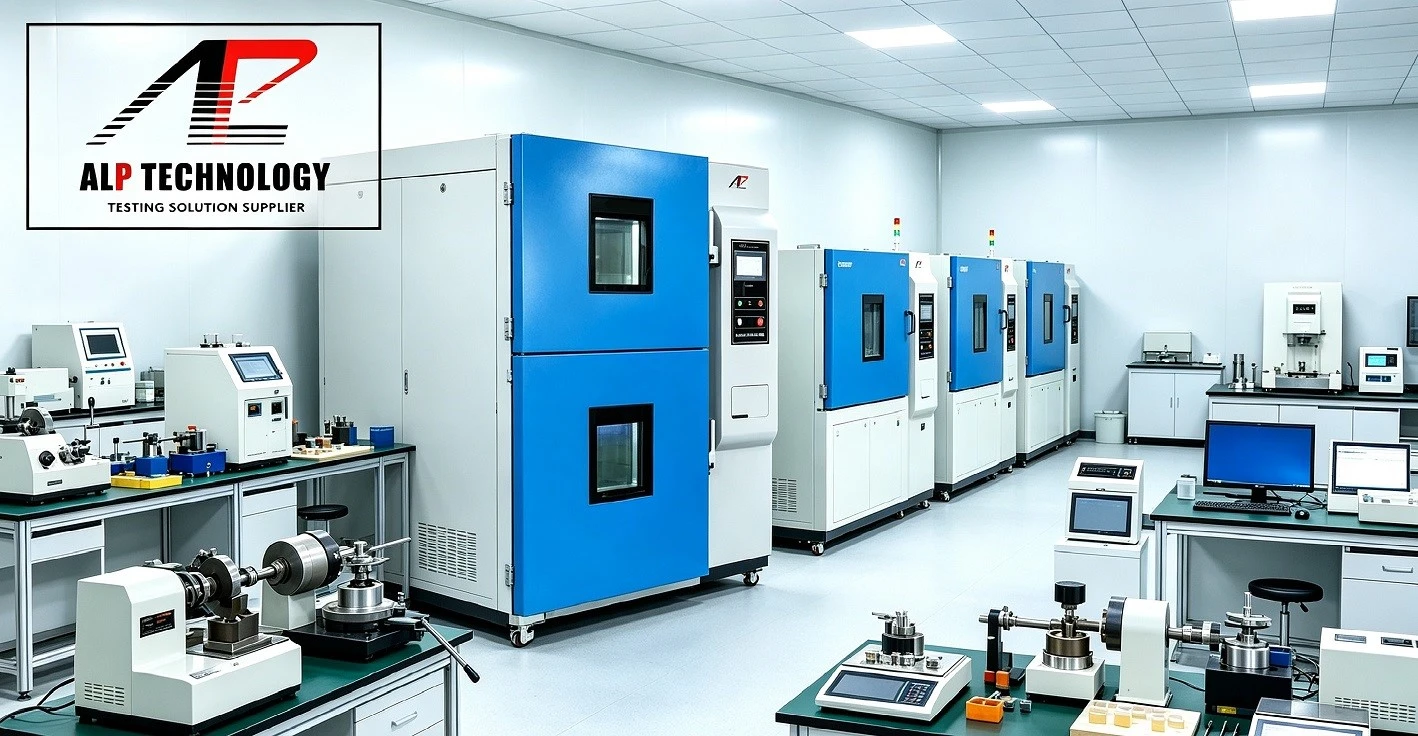
Equipping a laboratory with suitable analytical and testing instruments is one of the most foundational yet challenging tasks for lab managers, technicians, and procurement teams. With a flooded market of diverse instrument models, varying technical specifications, and inconsistent manufacturing standards, many institutions struggle to filter out devices that truly match their operational scenarios, compliance requirements, and long-term development goals. Properly selected laboratory hardware directly determines testing accuracy, operational safety, daily workflow efficiency, and data traceability across research, medical diagnosis, industrial quality control, and third-party testing laboratories. As a professional provider of precision testing and laboratory equipment solutions, ALP technology summarizes a complete, actionable selection framework to help laboratories make data-driven, cost-effective, and future-proof purchasing decisions.
This comprehensive guide reorganizes core evaluation dimensions for modern lab instrument procurement, covering demand matching, technical performance, structural durability, safety design, operational experience, and after-sales guarantee, helping every laboratory avoid common selection pitfalls.
Clarify Actual Laboratory Application Scenarios and Functional Requirements
The premise of standardized instrument procurement is defining real application demands rather than blindly pursuing high-end configurations or universal functions. Laboratory equipment selection must be tailored to the institution's core business orientation, whether for scientific research exploration, clinical medical detection, industrial material inspection, or routine quality verification. Different application scenarios correspond to completely different parameter standards, functional configurations, and compliance thresholds.
Clinical diagnostic laboratories generally require specialized analytical devices including hematology analyzers and imaging diagnostic instruments to meet medical detection standards. Scientific research institutions focus heavily on high-precision analytical tools such as high-resolution microscopes, high-speed centrifuges, and gene sequencing systems. Industrial quality inspection laboratories prioritize material performance testers, spectral analysis equipment, and mechanical property detection instruments for batch sample verification.
ALP technology always recommends customers sort out detailed test types, sample specifications, detection frequency, and industry compliance standards in advance, so as to screen targeted equipment models and eliminate over-configured or under-performing products.
Prioritize Metrological Accuracy and Test Repeatability
In laboratory operations, metrological precision and result stability are the core lifelines of all test data. Minor measurement deviations may trigger chain errors in experimental analysis, product quality judgment, and medical diagnosis results. Therefore, equipment performance consistency and reliable measurement output must be the top evaluation indicator.
During model selection, laboratories must verify two core indicators: regular calibration compatibility and low-deviation measurement capability. Qualified laboratory instruments should support periodic professional calibration to maintain long-term data consistency and ensure minimal numerical fluctuation in repeated tests. Stable precision performance effectively reduces repeated experiments, sample waste, and data correction costs, bringing long-term operational value to laboratories.
All laboratory and testing devices developed by ALP technology adopt standardized metrological design, supporting traceable calibration and high-consistency repeated testing, fully adapting to strict data management requirements of modern laboratories.
Evaluate Structural Reliability and Long-Term Serviceability
Laboratory instruments usually operate continuously under high-frequency, long-cycle, and complex environmental conditions. Structural stability, material durability, and fault resistance directly affect laboratory operational continuity. Inferior equipment is prone to structural loosening, parameter drift, and functional failure during critical testing procedures, resulting in project delays and additional maintenance costs.
Besides overall build quality, equipment serviceability is equally critical. Lab managers need to confirm the convenience of daily maintenance, the accessibility of original spare parts, and the timeliness of professional after-sales repair services. Choosing equipment from established manufacturers with mature production systems and stable quality control systems can effectively reduce equipment downtime and operational risks.
Adhering to industrial-grade manufacturing standards, ALP technology optimizes the structural rigidity and component durability of each instrument, while building a global spare parts supply and maintenance system to ensure stable long-term operation of customer equipment.
Match Equipment Size and On-Site Layout Conditions
Most laboratory spaces have fixed layout constraints, making spatial matching a key factor that cannot be ignored in equipment procurement. Different instruments vary greatly in footprint, installation height, and operating reserved space. Blind purchase of large-scale equipment may lead to crowded layouts, blocked operation spaces, and unsmooth experimental workflows.
Before finalizing procurement, teams need to complete on-site measurement and comprehensively evaluate supporting conditions including equipment placement space, ventilation system matching, power load requirements, and heat dissipation environment. Reasonable space adaptation ensures standardized laboratory layout, orderly daily operations, and compliant equipment operation.
ALP technology provides professional pre-sales layout consultation and model matching services, recommending compact and space-efficient instrument configurations according to customer lab scale to maximize site utilization.
Implement Reasonable Budget Planning and Cost-Performance Evaluation
Capital budget is an essential constraint in laboratory equipment renewal and procurement. High-specification flagship models carry complete functions and advanced technologies, yet they may cause functional redundancy and resource waste for conventional laboratory scenarios. Scientific procurement requires a balance between upfront investment and long-term operating costs.
Laboratory procurement teams need to comprehensively assess three major cost dimensions: initial procurement expenditure, daily maintenance and energy consumption costs, and long-term service life depreciation. In most cases, moderately priced, highly durable, and functionally targeted equipment delivers higher comprehensive cost performance than purely low-priced products with unstable quality.
Positioned at practical industrial and laboratory-grade configuration, ALP technology instruments avoid excessive premium functions, ensuring every configuration matches actual user scenarios and helping customers achieve refined budget control.
Verify Comprehensive Safety Protection Mechanisms
Laboratory testing processes often involve chemical reagents, biological samples, high-pressure operation, and high-temperature environments, where potential safety hazards exist. Modern laboratory instruments must be equipped with systematic safety protection designs to protect operators, samples, and the entire laboratory environment.
Core safety configurations include intelligent automatic power-off protection against overheating and abnormal operation, mechanical safety locks to prevent misoperation and unauthorized access, and independent ventilation and exhaust structures for fume and heat-generating equipment. Meanwhile, qualified instruments must comply with international ISO safety specifications and local occupational safety standards to meet laboratory compliance assessment requirements.
ALP technology takes laboratory operational safety as the primary design principle, embedding multi-layer mechanical, electronic, and intelligent safety interlock systems in all equipment to eliminate potential risks during testing.
Check Operational Simplicity and Technical Training Support
Complicated and unintuitive operating systems easily trigger operational errors, inconsistent test standards among different technicians, and low experimental efficiency. Excellent laboratory instruments feature humanized interactive interfaces, standardized operating logic, and clear functional guidance, lowering the threshold for staff entry and daily operation.
In addition to user-friendly hardware design, complete supplier training services are indispensable. Systematic operational training, parameter setting guidance, and routine maintenance training can effectively reduce human errors and improve overall laboratory testing efficiency and standardization.
ALP technology provides free professional operational training and remote technical guidance for all cooperative customers, helping teams quickly master equipment operation, calibration, and daily maintenance skills.
Evaluate Intelligent Automation Capabilities Based on Throughput Demands
With the rapid upgrading of laboratory intelligence, automated testing systems have become an important tool to improve batch testing efficiency and reduce manual intervention. Intelligent automation functions are especially suitable for high-throughput laboratories with large sample volumes and repetitive testing processes, effectively shortening experimental cycles and reducing human-induced data errors.
Common efficient automation configurations include automatic sample processing systems, intelligent pipetting modules, robotic sample handling platforms, and integrated data statistics and analysis software. Nevertheless, low-frequency and simple conventional tests do not require excessive automation functions to avoid resource redundancy.
ALP technology supports customized intelligent module upgrading, matching personalized automation solutions according to customer sample throughput and business scale.
Refer to Industry User Feedback and Practical Evaluation Data
Parameter indicators on official brochures can only reflect theoretical performance, while real user feedback truly reflects equipment stability, environmental adaptability, and after-sales service level. Before purchasing, laboratories can collect real evaluation information through industry forums, professional platform reviews, and peer user sharing.
Understanding the long-term operating performance, failure rate, and actual application effects of the equipment in the same industry can effectively avoid selection mistakes caused by information asymmetry.
With extensive global user cases in industrial testing, scientific research, and third-party laboratories, ALP technology accumulates massive practical application data, providing reliable industry reference for new customers' equipment selection.
Cooperate with Qualified and Reputable Equipment Suppliers
High-quality equipment and reliable after-sales service system depend on standardized and reputable suppliers. Formal and professional manufacturers can ensure product quality consistency, complete warranty mechanisms, and timely technical support, which is the core guarantee for long-term stable laboratory operation.
When screening suppliers, laboratories need to focus on brand industry reputation, product quality control system, after-sales response efficiency, warranty policy, and reasonable return and exchange mechanisms. Professional suppliers can provide one-stop services including pre-sales consultation, model selection matching, installation and commissioning, and after-sales maintenance.
As a professional laboratory testing equipment manufacturer and solution provider, ALP technology adheres to strict quality control standards throughout production, delivering standardized, compliant, and high-cost-performance laboratory instruments and full lifecycle technical support for global laboratory customers.
Final Conclusion
Laboratory equipment selection is a systematic project that integrates demand matching, technical performance, safety compliance, budget control, and after-sales guarantee. Reasonable instrument configuration is the core foundation for laboratories to achieve accurate data, standardized management, and efficient operation. By following scientific selection logic and cooperating with professional brands such as ALP technology, laboratories can complete equipment iteration and upgrading in a targeted manner, steadily improving overall laboratory operational capability and industry competitiveness.
ALP TECHNOLOGY is a well‑established supplier of high‑performance climate test chambers. Our sophisticated testing hardware enables manufacturers to achieve superior product standards and strengthen their competitive edge. We supply a full portfolio of equipment delivering accurate, stable environmental test results.
Confused about your chamber selection?
Our experienced sales specialists will guide you through the whole choosing procedure smoothly.
Whether you are standardizing a new product line or solving a difficult failure issue, ALP TECHNOLOGY is ready to help.
✉️ E-mail: info@alp-environment.com
🔗 Website: www.alp-environment.com
"Technological Excellence Rooted in Integrity" - engineered into every test, delivered with every partnership.