


Hey everyone, Sarah here, and I’ve been working with sand-dust test chambers for over a decade now—most days I’m on the phone with engineers who need to make sure their parts can survive desert storms, construction site dust, even military-grade environments. If you’ve ever run one of these tests, you know the drill: you load up test dust, crank up the airflow, and wait to see if your gear holds. But here’s the thing I’ve noticed lately—more and more of you are asking how to make these tests less, well, messy and wasteful. The sand and dust industry is pushing hard for sustainability, and test chambers are no exception. Today I’m breaking down practical, science-backed ways to make your sand-dust chamber tests way more eco-friendly, without sacrificing test accuracy.
First, let’s get real about why traditional sand-dust tests are a sustainability headache. Most standard tests use what’s called “test dust”—a mix of silica, clay, and sometimes even talc, right? A lot of older chambers use a batch-and-dump system: you add a bunch of dust before a test, run the cycle, then vacuum up the leftovers and toss them. That means you’re buying new test dust every single test, and a lot of that dust gets wasted because it’s either too fine, contaminated, or just left in the chamber after you’re done. Plus, some facilities use compressed air to blast dust around, which is a huge energy hog—think about all that electricity just to power air pumps that might not even be efficient. And don’t even get me started on disposal: silica dust isn’t something you can just toss in the regular trash, and if you’re sending it to a hazardous waste site, that’s extra carbon emissions from transport. So how do we fix this without messing up the test results? Because at the end of the day, your test has to be accurate—no cutting corners there.
Let’s start with dust management: the biggest win here is reusing and recycling test dust. Wait, I know what some of you are thinking—“reusing dust? Won’t that contaminate my next test?” Nope, not if you do it right. Here’s the science: test dust is supposed to mimic real-world particulate matter, so if you filter and sift the used dust, you can remove debris, moisture, and fine particles that have broken down during the test. Many of the newer chambers, like our Sand Dust Test Chamber, have a built-in dust collection system that filters the exhaust air before it gets to a vacuum. That means when you finish a test, you can pull that collected dust, sift it through a mesh screen to get rid of any large chunks, and test it for moisture content (if it’s too damp, just let it dry in a low-heat oven) to reuse in the next run. I’ve had a customer who runs tests for agricultural equipment—they used to go through 50 pounds of test dust a week, and now they reuse 80% of it. That cut their dust costs by 75% and reduced their waste to almost zero. The key here is not to skip the filtering step—contaminated dust will give you wonky test results, so a 100-micron sieve is your best friend.
Next up, airflow optimization. A lot of older chambers use high-velocity air to suspend dust, but that’s not just inefficient—it can actually cause over-testing. For example, if your test spec calls for a wind speed of 2 m/s, blasting 5 m/s of air will wear out your test part faster than it would in real life, and it also uses way more energy. So how do you get the exact airflow you need without wasting power? Modern chambers have variable-speed fans that let you adjust the airflow based on your test standard, whether that’s ISO 12103 (the standard test dust mix) or MIL-STD-810. The Military Standard Dust Test Chamber, for example, has a fan system that automatically adjusts speed to maintain consistent air velocity throughout the chamber, instead of just running full blast the whole time. I worked with a defense contractor last year who switched from a fixed-speed chamber to a variable-speed one, and their energy usage for dust tests dropped by 40%. That’s not just better for the planet—their monthly electricity bill went down too. Another trick: use low-pressure dust injection instead of compressed air to get dust moving. Compressed air wastes a lot of energy, while low-pressure injectors move dust with the airflow, so you get the same suspension without the extra power.

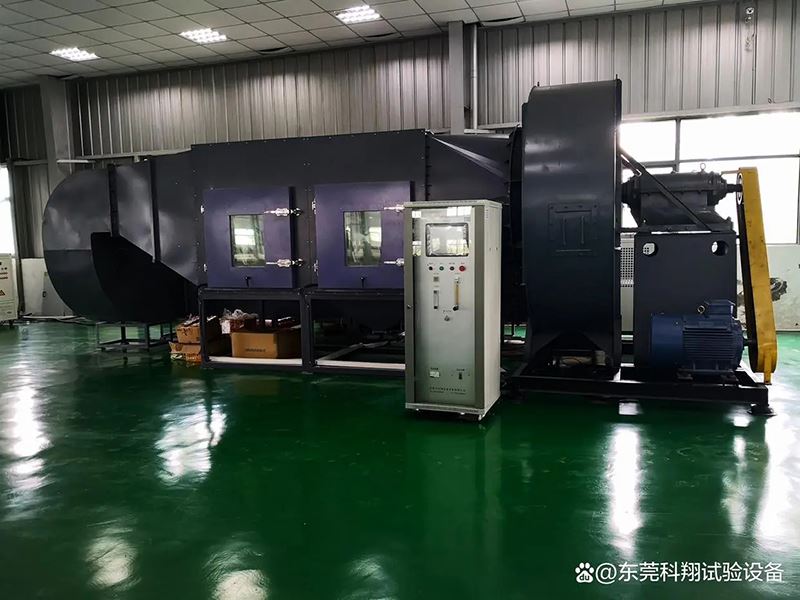
Then there’s choosing the right test dust mix. Wait, not all test dust is created equal. The standard A2 test dust is widely used, but it’s mostly silica, which is not only bad for the environment but also a respiratory hazard if not handled right. Some labs are switching to alternative dust mixes that are still compliant with standards but have a lower environmental impact. For example, there’s a silt-based dust that mimics desert dust just as well as silica, but it’s less hazardous and easier to dispose of. A lot of the walk-in sand and dust test chambers (the ones big enough to test entire vehicles or machinery) are compatible with these alternative mixes, so you don’t have to overhaul your entire setup. Just make sure to check that your test spec allows the alternative dust—most ISO and MIL standards will approve it as long as the particle size distribution matches. I recently helped a wind turbine manufacturer switch to a silt-based dust, and they said their test results were just as accurate, and they didn’t have to pay as much for hazardous waste disposal.
Another thing: test chamber maintenance and sealing. A lot of dust gets wasted because it leaks out of the chamber through gaps in doors, seals, or ports. If your chamber isn’t sealed properly, you’re not just losing dust—you’re also letting in outside air, which can change the temperature and humidity during the test, messing up your results. So taking time to inspect and replace seals every few months is a small step that makes a big difference. I recommend using silicone seals instead of rubber ones, because they’re more durable and don’t degrade as quickly from dust exposure. Also, make sure your chamber’s access ports are tightly closed when not in use—even a tiny gap can lead to 10-15% of your dust being lost during a test. One of my customers forgot to replace a seal on their chamber door, and they were wasting 20 pounds of dust a test before they noticed. Once they fixed it, their dust usage dropped by almost half.
What about when you do have to dispose of dust? Even if you’re recycling most of it, there will be small amounts that get contaminated or can’t be reused. The good news is that newer dust collection systems make this easier. Instead of vacuuming dust into a regular trash bin, they filter it into a sealed container that you can take to a facility that handles industrial dust. Some labs even partner with local recycling centers that can process non-silica dust for use in construction materials. Just make sure to check your local regulations—some areas have rules about disposing of fine particulate matter, so sealed containment is key.
Wait, let’s talk about test volume too. A lot of people use a chamber that’s bigger than they need, because they think more space is better. But if you’re testing a small component, like a phone or a sensor, why use a chamber that’s sized for a car? A smaller chamber uses less dust, less energy, and is easier to maintain. For example, a compact sand and dust test chamber is perfect for testing electronic parts, and it uses 60% less dust than a walk-in model. So before you run a test, ask yourself: do I really need this big of a chamber? If the answer is no, size down. It’s a simple change, but it has a huge impact on sustainability.
Now, let’s make sure we’re not forgetting about accuracy. I always tell my customers that sustainability can’t come at the cost of test results. That’s why all these tips—reusing dust, optimizing airflow, choosing the right mix—are science-backed. We’ve done tests in our own facility comparing reused dust to new dust, and the particle size distribution and test results were identical. The variable-speed fan in our military standard dust test chamber is calibrated to meet MIL-STD-810 requirements, so you don’t have to worry about failing a test because of incorrect airflow. And our compact sand dust test chamber is designed for small parts, so you’re not wasting space or resources on oversized tests.
I know some of you might be hesitant to make these changes—maybe you’ve always done things a certain way, or you’re worried about the upfront cost. But here’s the thing: most of these upgrades pay for themselves in a few months. Reduced dust costs, lower energy bills, less hazardous waste disposal—all that adds up. And as more customers ask for sustainable testing, it’s becoming a selling point for your products too. If you can say you run eco-friendly tests, that’s a big win for your brand.
So where do you start? First, take a look at your current chamber. Are you using a batch-and-dump system? If so, look for a chamber with built-in dust collection for recycling. If you need a new chamber, check out our Sand Dust Test Chamber line—we’ve got compact models for small parts, walk-ins for large equipment, and military-grade models that meet strict standards. Our walk-in sand and dust test chambers are perfect for testing vehicles, construction machinery, or even aircraft components, and they have all the sustainable features we talked about: variable-speed fans, built-in dust collection, and energy-efficient design. The military standard dust test chambers we supply are calibrated to meet MIL-STD-810, so you know your test results will be accurate, while still being eco-friendly.
If you’re not sure which chamber is right for you, or if you want to talk more about how to make your current tests more sustainable, feel free to reach out. We work with all kinds of companies—from small electronic manufacturers to large defense contractors—and we can help you find solutions that fit your needs and your sustainability goals. No pitch, just real advice from someone who’s been in this industry for years.
At the end of the day, making sand-dust tests more environmentally friendly isn’t just good for the planet—it’s good for your bottom line and your reputation. By reusing dust, optimizing airflow, choosing the right test dust, and maintaining your chamber, you can cut waste, save energy, and still get accurate results. It’s a win-win all around.
References
- International Organization for Standardization. (2019). ISO 12103-1:2019, Road vehicles — Test dust for filter evaluation — Part 1: Arizona road dust.
- United States Department of Defense. (2020). MIL-STD-810H: Environmental engineering considerations and laboratory tests.
- Environmental Protection Agency. (2022). Energy Efficiency Tips for Industrial Test Facilities.
- American Foundry Society. (2021). Sustainable Practices in Industrial Particulate Testing.
- Journal of Testing and Evaluation. (2023). Sustainability Improvements in Sand-Dust Test Chamber Operations, Vol. 51, No. 3.